
The Production AI Shift Is Here

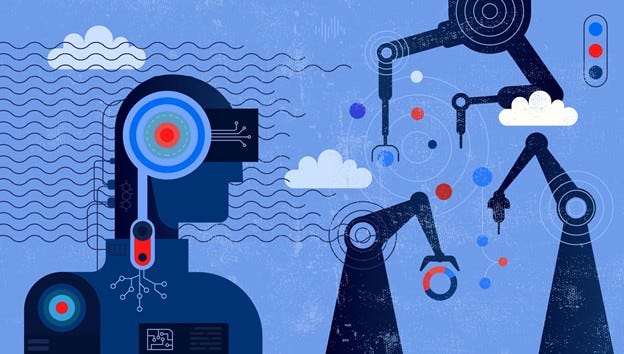
A new divide is emerging in the world of artificial intelligence. While AI pilots and prototypes have become commonplace, the systems that deliver reliable, scalable, and governed business outcomes remain rare. The era of experimentation is giving way to a new imperative: the shift to production. This transition marks the true beginning of AI’s economic impact.
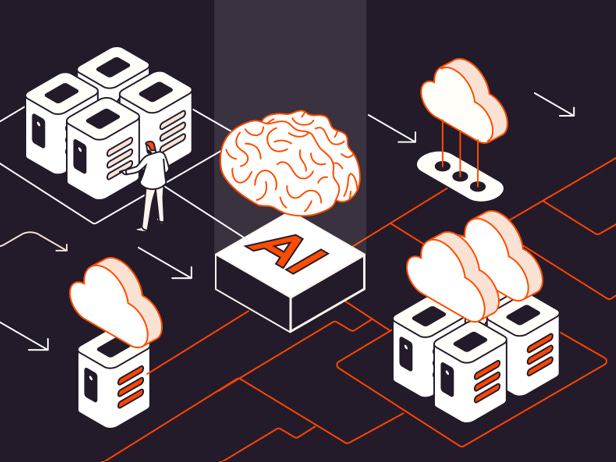
Over the last 18 months, enterprises have learned a painful truth. Scaling GenAI is expensive. Closed APIs were fast to deploy, but as usage exploded, so did the bills.
Costs now rise linearly with every new prompt, workflow, or department that joins the experiment. CFOs are starting to see “token spend” as a real budget line.
Open-source models looked like the escape hatch: full control, lower cost, no lock-in.
But in practice, stitching together fine-tuning, inference, monitoring, and governance turned into a DevOps nightmare. Freedom came with friction.
This is the inflection point. Enterprises now demand efficient, sovereign inference at scale, the performance of closed models with the economics and control of open systems. And that shift is redefining the AI infrastructure market.
This is exactly where Nebius steps in.

The End of the Prototype Era
Let’s be honest.
The past two years were a hype cycle.
Everyone had a pilot. Few had a system.
Boardrooms loved the slides.
Reality hated the bills.
Most enterprises fell into what I call the demo trap:
Flashy proof-of-concepts.
Zero operational readiness.
Costs that explode once real users arrive.
Closed-source APIs made it easy to start and impossible to control.
Open-source stacks offered autonomy and endless maintenance headaches.
Both options led to the same bottleneck: AI that doesn’t scale without pain.

That’s why the next real battleground isn’t model building.
It’s production turning models into governed, efficient, and resilient systems.
That’s where Nebius has planted its flag.
From Models to Machines: The Nebius Token Factory
The Nebius Token Factory is not another “feature drop.”
It’s a structural move built to make AI behave like infrastructure.
It doesn’t stop at serving models. It manages the entire lifecycle: fine-tuning, deployment, autoscaling, and governance all in one controlled environment.
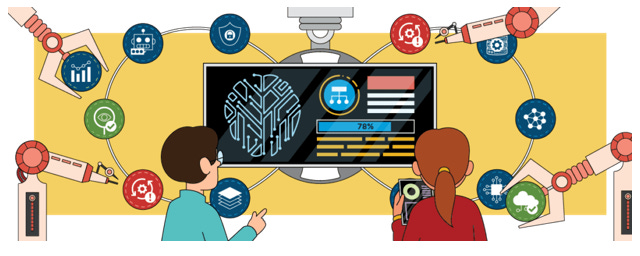
For enterprise teams, this means:
Optimized inference pipelines.
Open and custom models running with guaranteed uptime.
Fine-tuning directly inside secure workspaces.
Full visibility over cost, access, and compliance.
The result: control, the one thing most AI programs lost in the race to deploy fast.
Token Factory gives back what mattered most: reliability, auditability, and cost precision.
It integrates the layers every CTO has struggled to stitch together: inference, scaling, monitoring, governance, and makes them work as one.
This is what “AI in production” truly means:
A system that doesn’t crumble under its own complexity.
Proof in the Numbers
Early adopters tell the story better than any slogan.
Prosus, one of the world’s largest tech investors, cut inference costs by 26x after migrating to Token Factory.
Over 200 billion tokens run through the system each day, fully autoscaled, zero manual oversight.
That’s not a performance upgrade.
That’s a business transformation.
When token economics shift by 26x, the same budget buys 26 times more intelligence.
Higgsfield AI, the generative media platform, adopted Nebius to scale inference without destroying margins.
The result: predictable cost, faster deployment, and no operational chaos.Even Hugging Face, the beating heart of OpenAI, runs on Nebius infrastructure.
When the open ecosystem itself chooses your platform, it means you’ve built something that matters.
These are not isolated wins.
They mark a systemic shift: AI at scale is no longer a privilege of trillion-dollar giants.
It’s becoming an accessible, efficient infrastructure.
Built for Purpose, Not Marketing
Most clouds are adapted to AI.
Nebius was built for it.
Underneath Token Factory is Nebius AI Cloud 3.0, codename Aether, engineered from the ground up for extreme AI workloads.
Nebius designs its own hardware chassis, tunes power density, and co-optimizes hardware and software for inference throughput and latency.
That’s why it can deliver:
99.9% uptime.
Sub-second latency, even at heavy loads.
Zero-retention inference in EU or US data centers for full compliance.
SOC 2, ISO 27001, HIPAA certifications for regulated industries.
But what truly separates it is governance by design.
Projects are isolated, permissions are granular, billing is transparent, and every request is traceable.

For any AI leader, that’s not convenience, that’s audit-readiness built into the architecture.
Why This Shift Matters for Leaders
If you’re running an AI program today, you’re likely facing one of these pain points:
Costs that scale faster than ROI.
Fragmented infrastructure that can’t keep up.
Governance gaps that make compliance a gamble.
Token Factory exists to eliminate all three.
The next era of AI leadership isn’t about chasing bigger models; it’s about running intelligence sustainably and securely.
This is the industrialization of AI:
From demos to delivery.
From hype to operations.
From models to measurable outcomes.
When performance, governance, and economics align, AI becomes a real enterprise function, not a science project.
Token Factory represents that alignment.
Open where it matters. Controlled where it counts.

The New Economics of Intelligence
AI used to scale with cost.
Now it can scale with efficiency.
The early era of GenAI rewarded capability over cost control.
Every performance improvement multiplied spending.
Infrastructure innovation is flipping that equation.
By optimizing GPU utilization, automating scaling, and embedding fine-tuning directly into the platform, Nebius reduces latency and cost simultaneously.
Efficient inference is now a profit lever.
And when AI becomes cheaper to run, the smarter it gets, maturity turns into a competitive moat.
This is where CFOs stop asking “how much” and start asking “how fast.”
AI no longer drains the budget; it accelerates it.

From Models to Operations
The industry spent years glorifying the model.
But models don’t create value. Operations do.
Every production-grade AI system depends on three capabilities:
Inference optimization – to balance throughput and latency.
Lifecycle governance – to keep data, access, and versions compliant.
Continuous adaptation – to fine-tune from real-world feedback.
Token Factory doesn’t just support these.
It enforces them.
That’s how the field matures when best practices aren’t optional; they’re built into the toolchain.
This is how AI becomes invisible infrastructure: reliable, regulated, and everywhere.
Open Where It Matters. Controlled Where It Counts.
Nebius strikes the balance every enterprise needs.
It doesn’t force you into a proprietary cage.
It gives you the autonomy of open systems without chaos.
Freedom without friction.
Control without compromise.
From finance to healthcare, every sector is converging toward this model:
open innovation under sovereign control.