

Ten years ago the campus network was plumbing. Invisible, taken for granted, nobody’s problem until it leaked.
Today it carries every video call, every cloud application, every AI workload, tens of thousands of mobile and IoT devices, and increasingly AI agents talking to other AI agents.
The pipes did not get smarter. The traffic did. And the team running them did not get bigger.
That gap is the whole story. Everything else is vendor marketing.
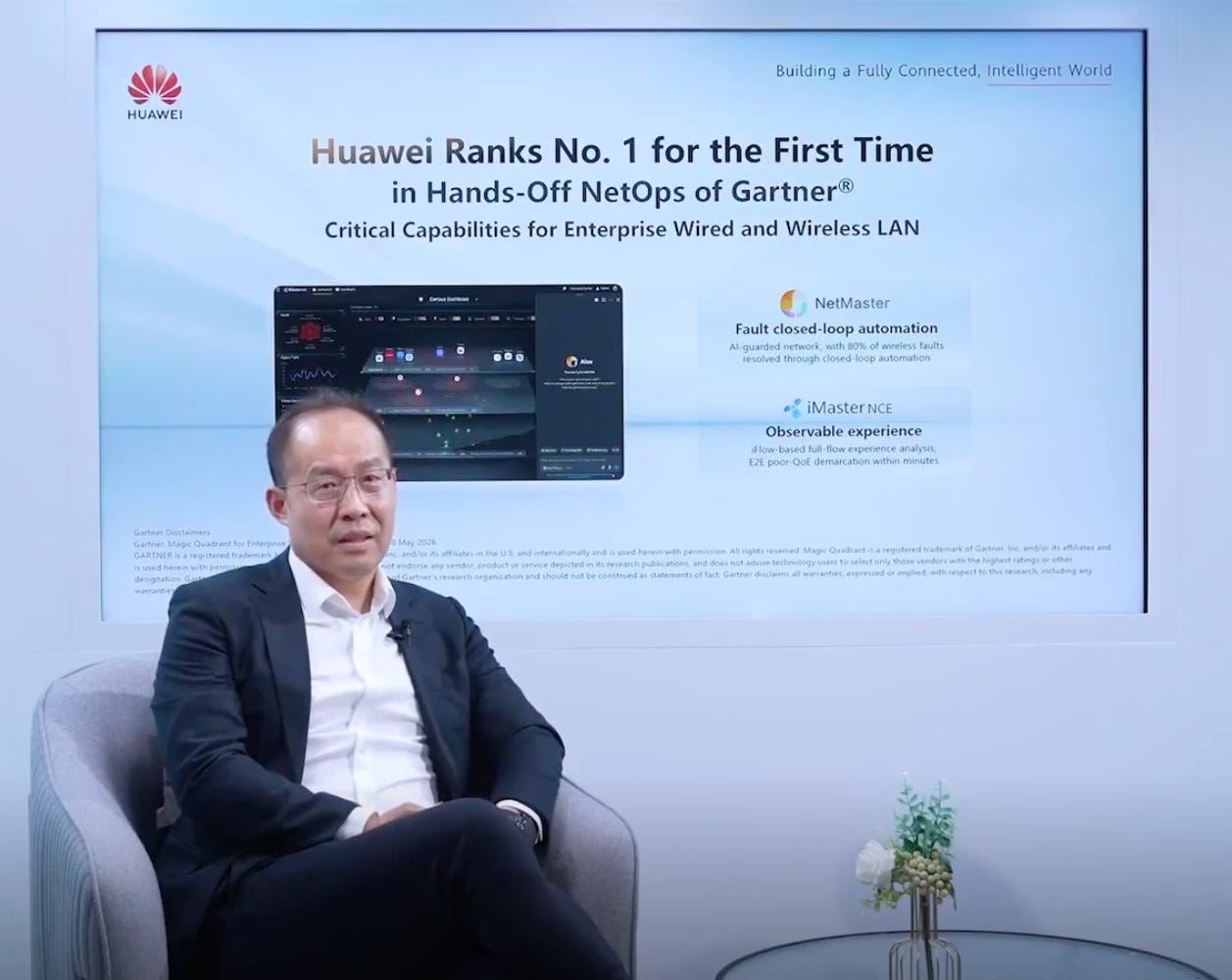
I sat down with Wang Hui, President of Huawei’s NCE Data Communication Domain, to unpack what the 2026 Gartner analyst cycle actually said about autonomous campus networking, and what it means if you are the one signing the purchase order. Below is the substance, the verified numbers, and the questions I would still ask before I bought anything.
First, definitions. Because the term is broader than it sounds
A campus network is the network that runs a large site. Corporate headquarters. A hospital. A factory. An airport. A hotel. A university.
It is all the wired and wireless connectivity inside the building. The Wi-Fi your laptop joins. The switches in the basement. The connections for badge readers, cameras, sensors and machines.
If you work in any large organisation, you use one every day. You have never thought about it. That was the point.
Here is what changed. Networks kept growing. More devices, more wireless, more critical. IT teams did not. The same few engineers keep everything running day and night, and the ticket queue only goes one direction.
Manual operation stopped being a strategy somewhere around the point where the environment started changing by the minute. Most organizations have not updated the operating model to match. They updated the dashboard instead.
That is the backdrop for everything that follows.
What the analysts actually said. With dates
I am careful with analyst claims because most people quote them badly. So here is the verified position, sourced and dated.
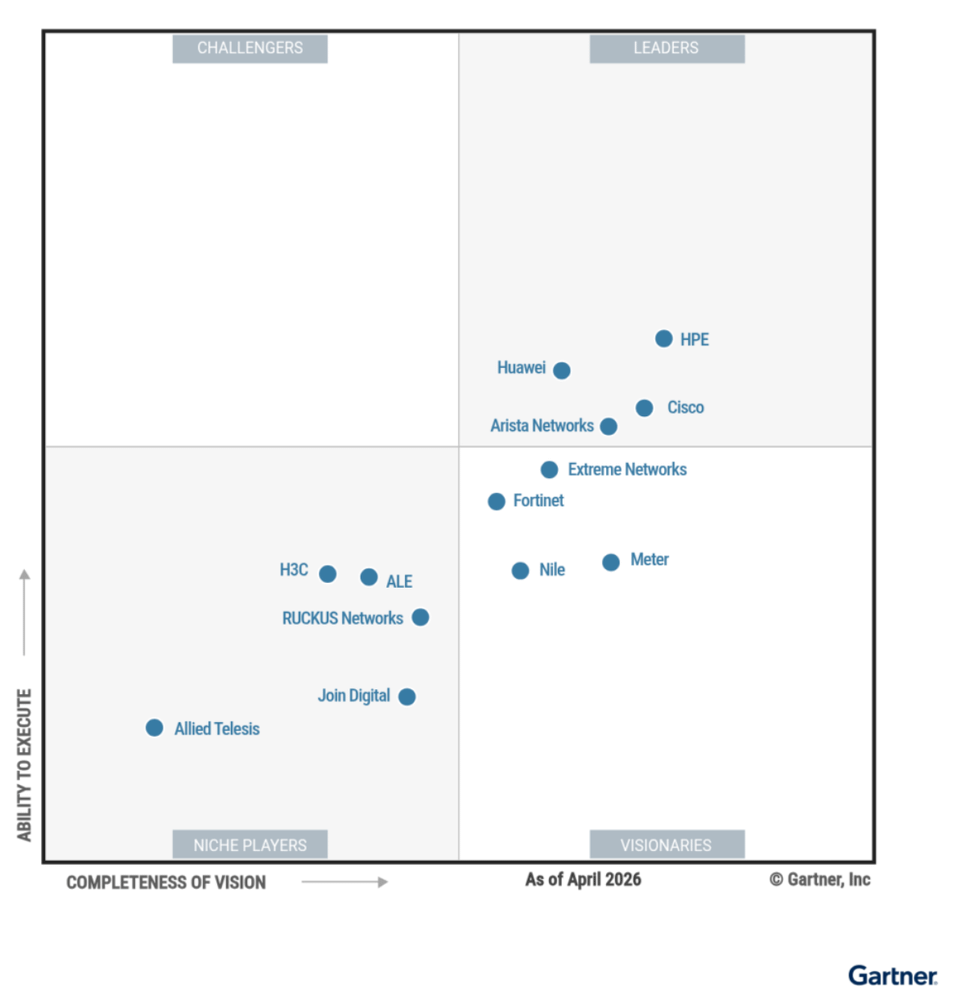
Gartner published the Magic Quadrant for Enterprise Wired and Wireless LAN Infrastructure on 18 May 2026. Huawei was named a Leader for the fourth consecutive year, and remains the only non-North American vendor in the Leaders quadrant. Source: Huawei announcement, 25 May 2026, e.huawei.com, confirmed by PR Newswire on 28 May 2026.
Gartner published the companion Critical Capabilities for Enterprise Wired and Wireless LAN. Huawei announced on 15 June 2026 that it ranked number one for the first time in the Hands-Off NetOps use case. Source: e.huawei.com news release, 15 June 2026. The Gartner document lists the use cases evaluated, including Hands-Off NetOps, AI Networking, Zero-Trust LAN and Campus Fabric Segmentation, with analysts Christian Canales, Tim Zimmerman, Nauman Raja and Mike Leibovitz.
In the interview, Wang Hui put Huawei’s Hands-Off NetOps score at 4.13, first among all vendors. I could not independently verify that specific figure in public sources. Critical Capabilities scores are rated out of 5, so the number is plausible, but treat it as vendor-stated until you see the report yourself. That is the standard I apply to every vendor including the ones paying me.
Two things worth noting about the Magic Quadrant itself. First, positioning matters because for most buyers it is the first filter. Second, this year the weighting on AI capabilities went up significantly. That is not a small change. It means the evaluation criteria moved toward exactly the thing every vendor now claims to have.
Which is precisely why the Critical Capabilities report matters more than the quadrant. The quadrant tells you who is in the room. The use case scores tell you who can actually do the specific job you are hiring for.
Hands-Off NetOps, in plain language
In most organisations, network operations is still manual and reactive. Something breaks. A ticket is raised. An engineer investigates. An engineer fixes it. The loop closes because a human closed it.
That model breaks down when everything is wireless and the environment shifts hour to hour.
Hands-Off NetOps is Gartner’s benchmark for how intelligent a vendor’s operations and maintenance actually is. The industry also calls it the autonomous network. It borrows the grading system from self-driving cars: level zero through level five. Higher score, higher autonomy.
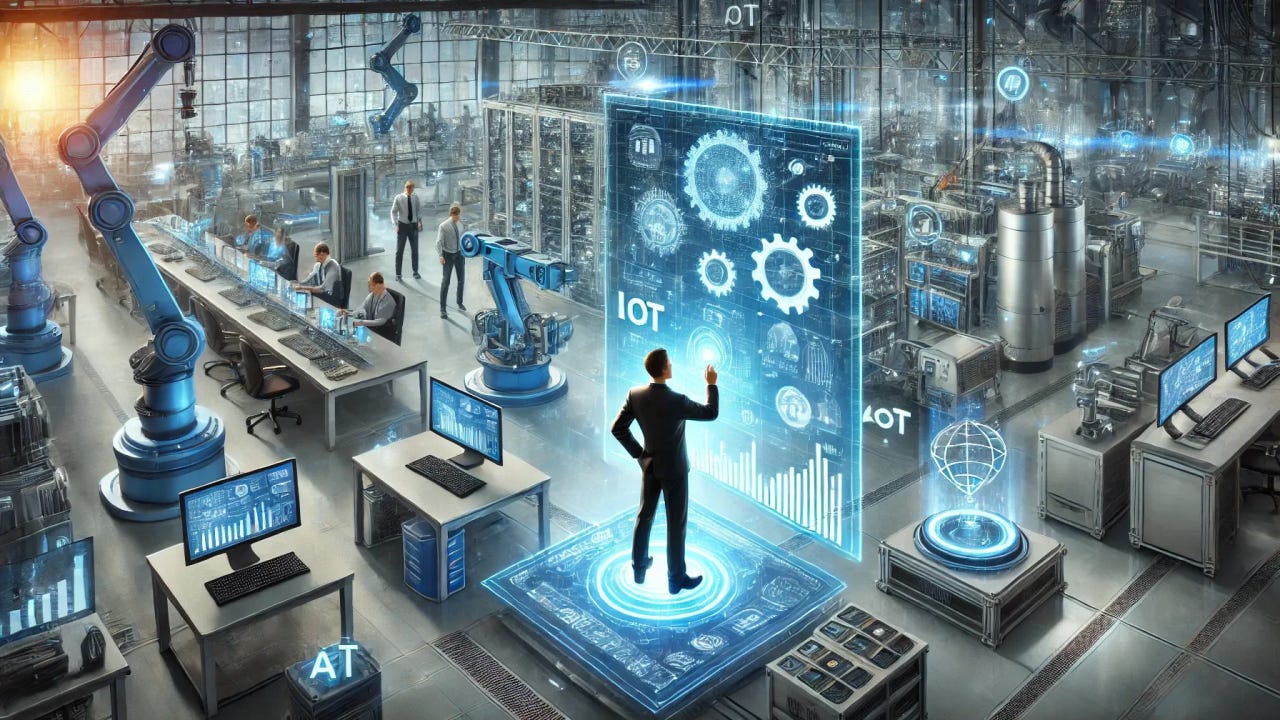
That analogy is useful and also slightly dangerous, so let me be precise about it. Level two in a car means the car helps and you still drive. Level four means the car handles the full task within a defined operational domain. Most enterprise networks today sit at the lower levels. Automation assists. Humans drive.
The driving forces behind the shift, per Wang Hui, are two.
One is on the device side. Large numbers of smart terminals and agents now run around the clock, including overnight, because compute is cheaper at night. Networks are therefore expected to deliver quality service 24 hours a day, seven days a week, and to recover from faults automatically when they occur.
Two is on the service side. Enterprise systems such as ITSM are undergoing their own agent-enabled transformation. Cross-system collaboration through agent-to-agent protocols becomes the norm. If the applications are agentic and the infrastructure is not, the infrastructure becomes the bottleneck.
Translate that and you get the actual claim: the network watches itself, diagnoses itself, and in most cases repairs itself. The IT team handles exceptions only.
That is a change in operating model. Not a new dashboard.
The honest challenge. Insight is not action
I have twenty five years in IT operations across twenty plus countries. Here is the pattern I have watched repeat for a decade.
Every vendor claims AI. Most can show you a very attractive dashboard telling you something is wrong. A human still does the actual fixing. The workload never goes away. It just gets better graphics.
I built a framework for this because I got tired of arguing about it. Output, Outcome, Impact.
Output is what the system produces. An alert. A root cause hypothesis. A recommendation. Vendors love outputs because outputs demo beautifully.

Outcome is what changed in the operation. The fault was resolved. The ticket never opened. The engineer was never paged.
Impact is what changed in the business. Fewer hours consumed. Lower mean time to repair. A class that did not get interrupted. A production line that did not stop.
Most AI operations tooling sells you outputs and invoices you for impact. That is the gap.
So when I asked Wang Hui what concretely separates Huawei here, the answer was closed loop automation. The system generates a solution for the specific scenario and executes it end to end without human intervention.
His example was a smart classroom. Fifty students on connected terminals, live activities running. If the network fails, teaching stops entirely. With closed loop autonomy, recovery happens within about a minute and the class resumes.
Huawei’s published figure is that its NetMaster operations agent automatically diagnoses and resolves 80 percent of wireless faults, cutting mean time to repair from days to minutes. It cites 34 fault chain-of-thought types across eight categories, and real-time monitoring of more than 15 proprietary terminal experience indicators. Source: e.huawei.com, 15 June 2026.
That 80 percent number is vendor-published, not independently audited. It is also specific enough to be testable in a proof of concept, which is more than most vendors offer. Make them prove it on your estate.
What is actually under the hood
Wang Hui was clear on one point that I think is the most useful technical statement in the entire conversation: a single large language model is not enough.
Three capabilities have to work together.
The digital network map. Huawei describes this as a digital twin of the network, powered by its own silicon, providing real time data across the full estate. The published version is a four dimensional map covering networks, users, terminals and applications, moving away from device-centric operations toward experience-centric operations. Without accurate context, the reasoning layer is guessing with confidence. That is the worst failure mode in autonomous systems.
A network-specific reasoning model. Not a general purpose chatbot. A domain model trained on network knowledge spanning tens of thousands of networks, refined through supervised fine tuning and reinforcement learning, built to trace faults step by step and identify root cause.
Network simulation. This is the one most buyers skip and it is the one that matters most. If you execute a configuration change without simulating it first, you can take down more than you fixed. Huawei’s system simulates service impact before rollout and verifies whether the configuration actually resolves the fault.
Wang Hui also described a second AI layer: specialised small models for narrow tasks such as traffic forecasting and component failure prediction, working alongside the large model to raise accuracy.
Here is why the architecture point matters to you as a buyer. Anyone can put a language model in front of a network and call it an agent. Very few can supply that model with ground truth, constrain it to a domain, and gate its actions behind simulation. Insight versus action is the distinction. Simulation before change and fast rollback after is where the real operating saving lives, and it is also where the risk lives.
Ask the simulation question first. It filters the field faster than any other question in the room.
The Five Locks. What I would ask before signing
I built The Five Locks as an ownership audit for exactly this kind of purchase. Autonomous networking is a strong candidate for quiet lock-in, so run it properly.
Model lock. The reasoning model is trained on the vendor’s network corpus and tuned to the vendor’s telemetry. That is what makes it accurate. It is also what makes it non-portable. Ask directly: if we switch platforms in five years, what part of the accumulated operational intelligence comes with us? Usually the honest answer is none. Price that.
Data lock. The digital twin runs on telemetry collected in formats the vendor defines. Where does that data live. Who can export it. In what schema. Can your own observability stack consume it, or does it only make sense inside the vendor’s console. If the answer to the last question is yes, you have bought a black box with excellent uptime.
Talent lock. Autonomous operations does not eliminate the need for network engineers. It changes what they do. Your team stops fixing and starts governing: setting policy, reviewing what the agent did, handling the exceptions that the agent escalated. That is a different skill profile. If you do not plan the transition, you get the worst outcome available, which is a team that no longer practises troubleshooting and cannot take over when the automation reaches its limit.
Cost lock. Establish what is licensed separately. The operations agent, the simulation engine and the digital map may or may not be bundled with the hardware. Get the five year total, including what happens to the licence cost as your device count grows. Agentic device counts grow faster than human ones.
Exit lock. What is the actual cost of leaving in year four. Not the hardware refresh. The retraining, the reintegration, the loss of accumulated operational context. If nobody in the room can answer that, nobody in the room has read the contract.
None of this is an argument against buying. It is an argument for buying with your eyes open. Vendors respect buyers who ask these questions. The ones who do not are telling you something.
Where this goes, and the number nobody quotes back
Wang Hui’s forward view: autonomous networking is not a campus-only story. Data centre networks and wide area networks reach level four autonomy within the next several years, meaning networks that proactively serve the company’s agents with fast, reliable, secure connectivity around the clock. Alongside that, the network agent becomes one vertical agent among many. Infrastructure agents and application agents form a multi-agent network. Enterprises move from people-to-people connectivity to agent-to-agent collaboration.
The independent data supports the direction. Gartner published its first Market Guide for Agentic NetOps Software in May 2026, and projects that by 2030 AI agents will be the most common approach for executing network runtime activities, up from less than 1 percent in early 2026. Gartner also sets a high bar in that guide: pre-execution validation, multiple autonomy modes from human-in-the-loop to governed autonomous execution, transparent reasoning, and agents that work across multivendor infrastructure rather than a single vendor’s gear.
Read that last criterion twice. It is the one most vendor implementations will fail.
And now the counterweight, because I do not publish one-sided forecasts.
Gartner also predicts that more than 40 percent of agentic AI projects will be cancelled by the end of 2027, citing escalating costs, unclear business value and inadequate risk controls. Source: Gartner press release, 25 June 2025.
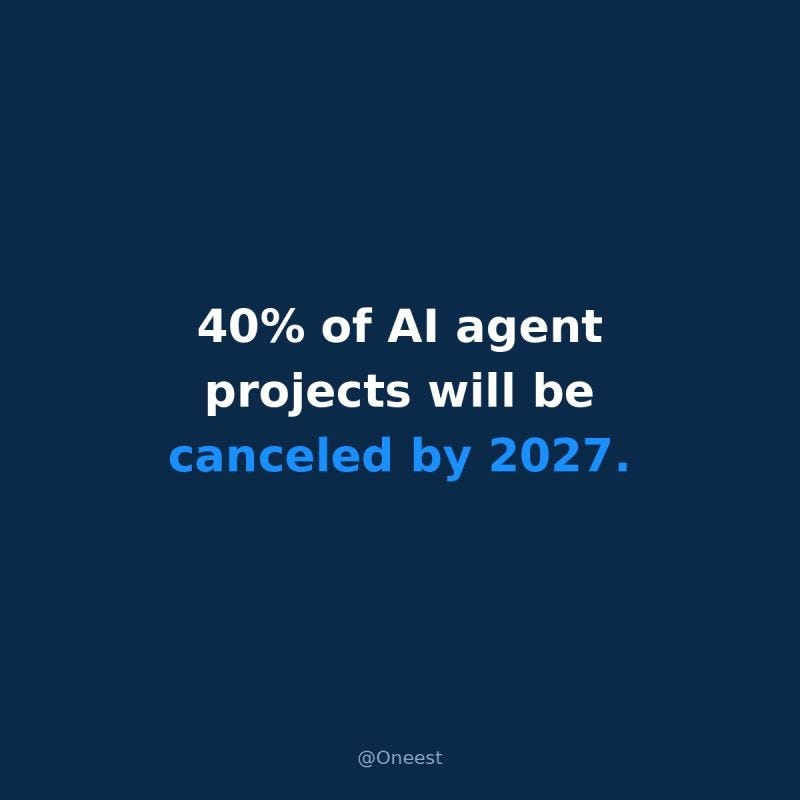
Both things are true at once. The destination is real. Most of the journeys currently underway will be abandoned before they arrive.
The difference between the projects that survive and the ones that get cancelled is almost never the model. It is whether anyone defined the outcome before they bought the technology, and whether anyone owned the operating model change that had to follow.
Three things to take away
One. The operating model is changing, not the tooling. Networks are too large, too wireless and too dynamic for manual operations. The analyst direction of travel is clear and dated. If your plan is to hire more engineers, your plan has an expiry date.
Two. The real vendor differentiator is no longer seeing problems. It is fixing them, automatically and safely. Closed loop with simulation before the change and fast rollback after. Anything less is a dashboard with a marketing budget. Huawei ranking first in Hands-Off NetOps in the 2026 Critical Capabilities report is a legitimate signal on that specific axis, and it is one axis of many. Buy for your use case, not for the quadrant.
Three. Run the ownership audit before the proof of concept, not after. Model, data, talent, cost, exit. The technology question is easier than the ownership question, which is exactly why everyone answers the technology question first.
We are stepping into a genuine new era of AI-guided network operations. The winners will not be the enterprises that adopted earliest. They will be the ones who knew what they were buying, what they were giving up, and what they still owned on the other side.
Thank you to Wang Hui for the detailed analysis and the direct answers.


