The Hidden Divide: What Remote Communities Taught Me About AI, Humanity and the Future

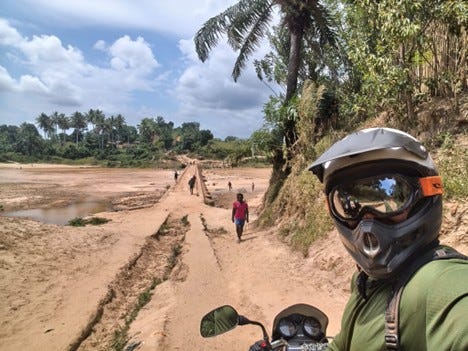
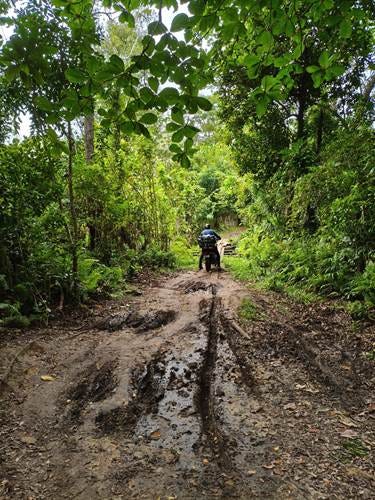
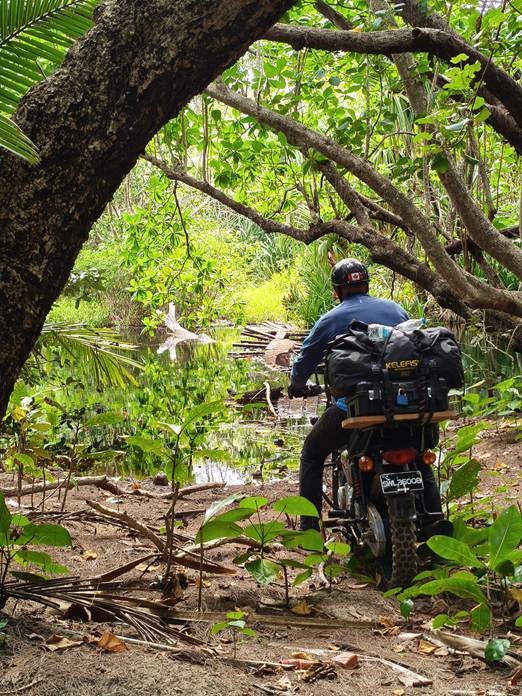
I spent weeks riding my motorbike through remote regions. Places where people live entirely in the real world.
Face-to-face. Human to human. No screens. No endless feeds.
In some areas, not even a basic phone.
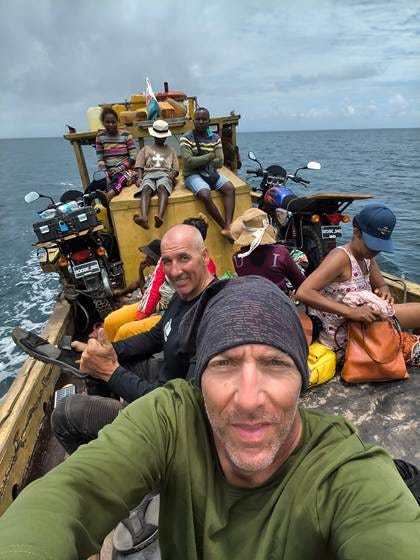
And what hit me was not poverty.
Not isolation.Not a lack of infrastructure.
It was the pure presence.

People spoke to each other instead of scrolling.
Kids ran, played, and explored.
Adults gathered, talked, debated, laughed, worked, and shared stories.
No one was half-distracted.
No one had a fractured attention span.
Everyone was fully there.
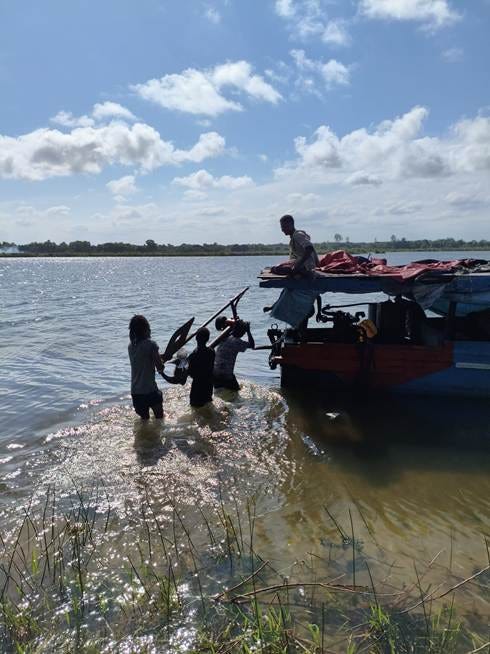
It felt like stepping into the 1980s.
Not in terms of technology, but in terms of connection.
And then it hit me.
While cities are racing into hyper-augmentation, there are still entire communities living in deep human reality.
Two worlds. Two speeds. Two forms of intelligence.
One augmented. One grounded.
And the gap between them is about to reshape humanity.

1. The Augmented Human Is Accelerating Faster Than Any Group in History
In every major city, a new kind of human is emerging.
The person who collaborates with AI every day.
The person who builds workflows with LLMs.
The person who solves problems through automation.
The person who multiplies their cognitive capabilities through machines.
This is not science fiction.
It is a daily fact for millions of workers, creators, founders, and students worldwide.
They learn faster. Produce more. Think deeper. See patterns earlier.
Execute faster than any generation before them.
They are becoming amplified individuals.
Not superior. Not elite. Just augmented.
And their acceleration is exponential.
Every day they use AI, they compound their advantage.
This is not a small gap. This is a new form of cognitive inequality.

2. The Unaugmented Human Still Lives at Human Speed
Now here is the contrast.
In many places, people still live with fully human intelligence.
No augmentation. No digital scaffolding. No algorithmic shortcuts.
No external memory. No automated reasoning.
Just raw human capability.
And here is the truth nobody wants to say out loud.
Human intelligence alone is still beautiful.
Still powerful. Still meaningful. Still enough to run a community, build a life, sustain culture, raise families, and keep social bonds strong.
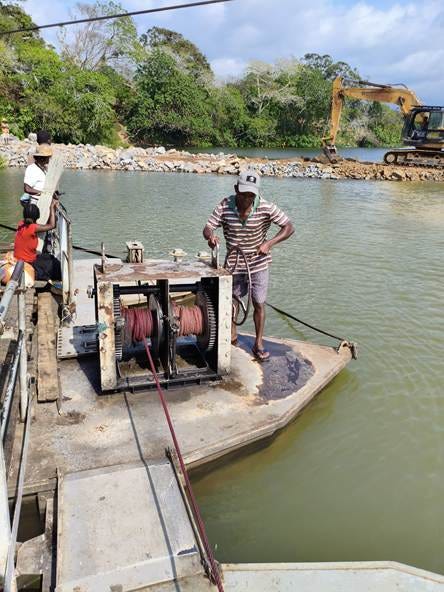
But in a world where augmented intelligence becomes the norm, human-speed cognition will not be enough to stay competitive in many modern domains.
Not in business.
Not in education.
Not in innovation.
Not in knowledge work.
And this is where the divide becomes dangerous. Because the difference between augmented and unaugmented is not linear.
It is exponential.
3. But Here Is the Twist Nobody Sees Coming
For all the advantages of augmentation, hyper-digital societies have a problem.
Attention is collapsing.
Presence is shrinking.
People multitask everything and remember nothing.
Social connections are weaker.
Digital noise overwhelms quiet thought.
Humans are becoming distracted versions of themselves.
In contrast, the communities I visited had something cities lost long ago.
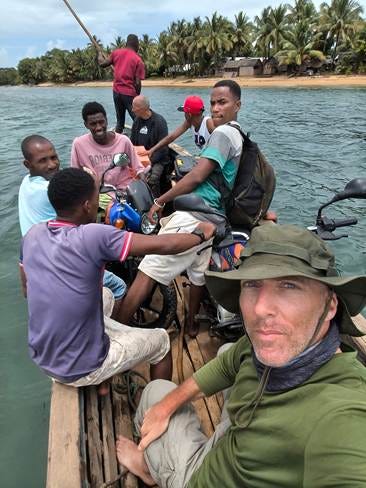
Depth.
Presence.
Patience.
Long conversations.
Social fabric.
Quiet minds.
Collective memory.
Shared routines.
Interdependence.
Human grounding.
Two worlds.
Both powerful.
Both lack what the other has.
Augmented humans have speed.
Unaugmented humans have presence.
Augmented humans have reached.
Unaugmented humans have a community.
Augmented humans have efficiency.
Unaugmented humans have attention.
Augmented humans run with machines.
Unaugmented humans run with each other.
The future demands both.
4. The Real Danger Is Not Inequality. It Is Asymmetry.
The divide is not rich versus poor.
Not Western versus non-Western.
Not city versus countryside.
It is augmented humans versus non-augmented humans.
And what makes it dangerous is not the difference in income or devices.
It is the difference in capability.
If a small percentage of the population becomes AI-fluent, they will shape everything.
Economy.
Policy.
Education.
Information flows.
Knowledge creation.
Innovation.
Strategic decision-making.
Meanwhile, the part of humanity that stays purely human will remain stuck with linear capacity.
And this creates a world where:
A few humans think with machines.
Most humans think alone.
This is the deepest asymmetry ever experienced.
Not because one group is smarter.
But because one group has amplification.
And once acceleration starts, it compounds.
This is the first divide in human history driven by intelligence itself.
5. And Yet, the Most Human Places I Visited Have Something We Lost
While riding through remote regions, I kept asking myself:
Who is really behind?
Who is really ahead?
Because in these communities, I saw:
People greet each other all day.
People working side by side.
People are laughing without checking notifications.
People are fully alive in each moment.
People with strong family networks.
People with genuine resilience.
People with deep attention.
People with low anxiety.
People who know their neighbors, their history, their traditions.

This is not nostalgia.
This is evidence that human connection thrives without digital interruption.
So here is the paradox.
The augmented human is gaining intelligence.
The grounded human is keeping humanity.
But the world needs both.
And the risk is that augmentation spreads without the human grounding that keeps societies stable.
6. The Future Cannot Be Hyper-Augmented or Hyper-Human. It Must Be Both.
If we go full augmentation, we lose our humanity.
If we stay at full human speed, we lose our competitiveness.
The path forward is a merge.
AI literacy without digital addiction.
Automation without social erosion.
Acceleration without losing presence.
Capability without losing connection.
Global access without global distraction.
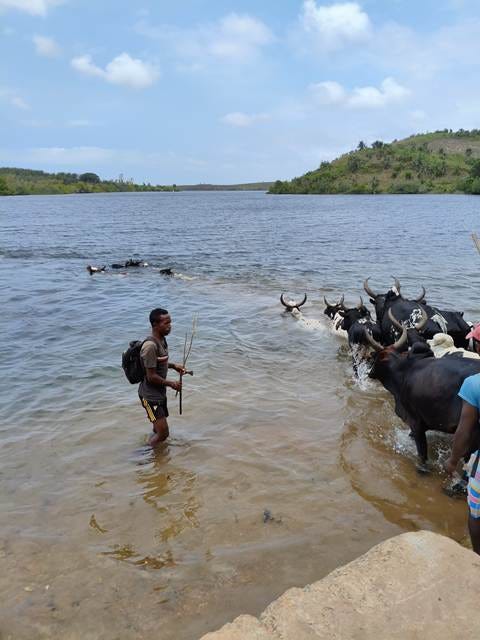
The world I saw on my motorbike is not a world that needs saving.
It is a world that needs protecting.
And enhanced.
Not replaced.
Not disrupted.
Not colonized by digital noise.
Elevated with tools that preserve community instead of breaking it.
This is the real mission.
Not pushing AI.
Educating humans.
Empowering them.
Augmenting without erasing.
7. The Call to Action: Augment the World Without Dehumanizing It
Here is the point.
We cannot let the world split into two species.
The hyper-augmented.
And the fully-human.
Both will lose.
The augmented lose humanity.
The unaugmented lose opportunity.
The only viable future is a future where:
AI literacy becomes universal
AI access becomes global
AI education becomes mainstream
AI tools become culturally adapted
AI adoption strengthens communities instead of dissolving them.
Augmentation reinforces the human qualities that matter.
We need to bring AI to everyone in a way that preserves what makes us human.
Not more apps.
Not more dashboards.
Not more digital noise.
More understanding.
More education.
More human-first design.
More respect for cultural rhythms.
More teaching about what augmentation really is.
We need to show people that AI is not a threat, not a mystery, and not magic.
It is simply a tool that extends your capability, the same way reading once did.
The same way writing once did.
The same way mathematics once did.
Augmentation should never be a privilege.
It should be a right.
And it should never cost us our humanity.
8. What Remote Communities Really Taught Me
Riding across those places, I did not see people “behind”.
I saw people living fully.
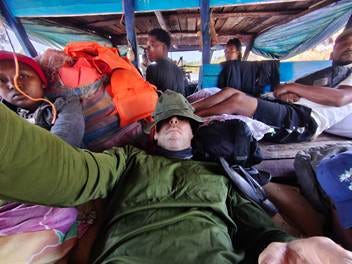
I did not see a deficit.
I saw a reminder.
A reminder that humans were not designed for infinite feeds.
A reminder that presence is a superpower.
A reminder that community is strength.
A reminder that attention is health.
A reminder that life can be lived without algorithms.
A reminder that connection does not require bandwidth.
The mission now is clear.
Bring augmentation to the world.
But protect the human parts that matter the most.

Not AI versus humanity.
AI in the service of humanity.
AI that elevates, not erodes.
AI that empowers, not replaces.
A future where intelligence is augmented.
And where humanity is preserved.
That is the only future worth building.