From Invisible Plumbing to Intelligent Thinking Systems
For decades, integration was part of the business no one talked about.
It wasn’t glamorous. It wasn’t celebrated. It was the quiet machinery underneath ERP, OMS, WMS, partner platforms, and now AI agents — a patchwork of logic you hoped wouldn’t break.
Every enterprise lives with the same pain: Data slipping through cracks. Systems are drifting out of sync. Teams are spending hours chasing what “should have worked.”
But behind all that friction, something larger was happening.
Because when your business runs on dozens of interconnected systems, the weakest integration or orchestration layer defines the speed, trust, and reliability of your entire operation.
And eventually, every enterprise hits the same wall: Legacy integration and orchestration can’t keep up with how the business needs to move.
Reimagining How the Enterprise Thinks
The problem was never just technical.
It was alignment.
Each system had its own logic — but no shared context. Data moved blindly. Failures propagated silently. And people simply stopped trusting the numbers.
When modern orchestration platforms emerged, a new idea entered the enterprise:
What if integration didn’t just move data? What if it understood intent? What if the system could anticipate issues, self-correct, and keep everything in sync — autonomously?
That’s the shift AEKYAM introduced: An AI-powered orchestration layer that connects the intelligence across the entire operational stack instead of stitching it together with brittle pipelines.
Suddenly, events weren’t just processed — they were interpreted. Workflows weren’t just executed — they adapted. Errors weren’t just logged — they resolved themselves.
The enterprise finally began to think.
The Turning Point
When teams stop firefighting and start innovating
In every organization making this transition, the pattern is the same.
They don’t start by boiling the ocean. They start with the daily battle — the one pain point that keeps people awake.
For Glen Raven, it was supply-chain stability. For others, it’s order orchestration, partner integrations, warehouse workflows, or customer operations.
And the moment orchestration goes live, the effect is immediate:
Transactions stop disappearing. Errors get resolved in real time. Orders move earlier in the day. Teams regain hours previously spent troubleshooting.
But the real shift isn’t operational.
It’s cultural.
People begin to trust the system again. They stop redesigning processes around failures. They start focusing on improving the business instead of repairing it.
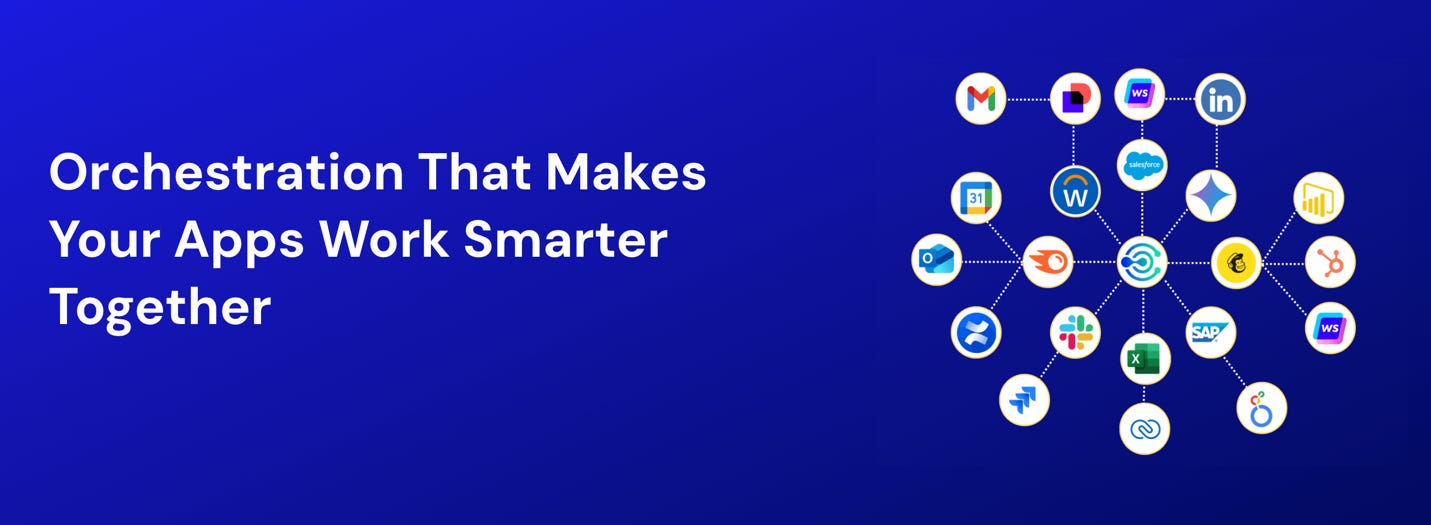
The company doesn’t just run faster — it starts thinking smarter.
The Power of an Intelligent Orchestration Layer
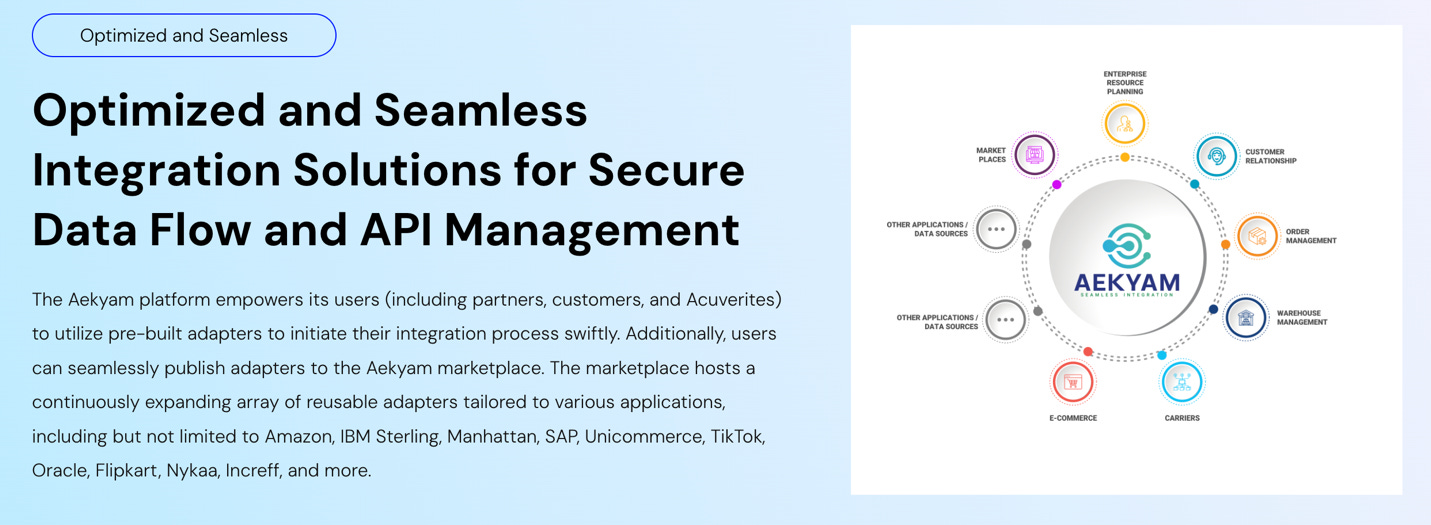
AEKYAM and platforms like it aren’t integration tools. They are orchestration engines built with embedded intelligence.
Here’s what changes everything:
Intent-aware routing. Events move with context, not blindly.
Autonomous recovery. Failures self-correct instead of cascading across systems.
Real-time observability. Every transaction is traceable end-to-end — ERP, OMS, WMS, AI agents.
Dynamic workflow: Processes adjust instantly to disruptions, inventory shifts, and delays.
Industry accelerators: Prebuilt templates reduce implementation from months to weeks.
No-code flexibility: Business teams gain the power to modify flows without waiting for IT.
When this layer becomes stable, visible, and intelligent, it unlocks something enterprises have chased for decades:
Operational clarity at the speed of business.
Visibility That Becomes Velocity
Once workflows start orchestrating themselves, everything upstream and downstream accelerates.
More orders move earlier. More cycles complete before cut-off. More decisions happen with real-time data. More customers feel the difference immediately.
Reliability isn’t a metric — it becomes the backbone of the business.
And when reliability rises, trust rises with it. Trust between teams. Trust in the systems. Trust that the business can scale without breaking.
That’s when integration and orchestration stop being plumbing and become a strategic asset.
A Thinking Layer for the Enterprise
Ashutosh Sangwan describes it simply:
“Integration is now the thinking layer of the enterprise.”

This is where:
Decisions synchronize Agility lives. New capabilities plug in without disruption
Want a chatbot? Add it. Want AI decisioning? Add it. Want to replace a legacy system? Do it safely.
Future-ready companies aren’t defined by their ERP. They’re defined by how fast they can rewire themselves when the world changes.
And today the world changes monthly.
Why This Matters Beyond Any Single Use Case
Every enterprise running a mix of legacy and modern systems faces the same truth:
Your competitive advantage is only as strong as your integration and orchestration layer.
The next decade won’t reward businesses with the most tools. It will reward businesses with the most connected intelligence.
Orchestration turns:
Data pipelines into decision pipelines, Automation into autonomy, Complexity into clarity, Integration into strategic advantage
The companies that understand this will move faster than their industries can react.
OG’s Take
Across every sector I work in — manufacturing, retail, energy, financial services — the pattern is identical:
Legacy limits velocity. Visibility restores trust. Intelligent integration creates autonomy.
This isn’t plumbing. This is a strategy. This is competitive differentiation. This is the nervous system of the modern enterprise.
The AI era won’t belong to the companies with the biggest models. It will belong to the companies whose systems — and teams — can think together.
And that begins with integration that finally understands the business it supports.
Final Thought
Most companies don’t fail because they lack tools. They fail because their systems can’t keep up with how the business actually moves.
The solution isn’t another application. It’s a thinking layer that sits across all of them — orchestrating, anticipating, resolving, and amplifying the entire operation.
The enterprises that adopt AI-native orchestration aren’t just fixing integration. They’re building living systems.
Systems that see. Systems that decide. Systems that act.
That’s the future.
And it’s already here.